michelle's blog
Space, Trust and the Roundabout: Michelle Mitchell on What Teens Really Need from Us
read

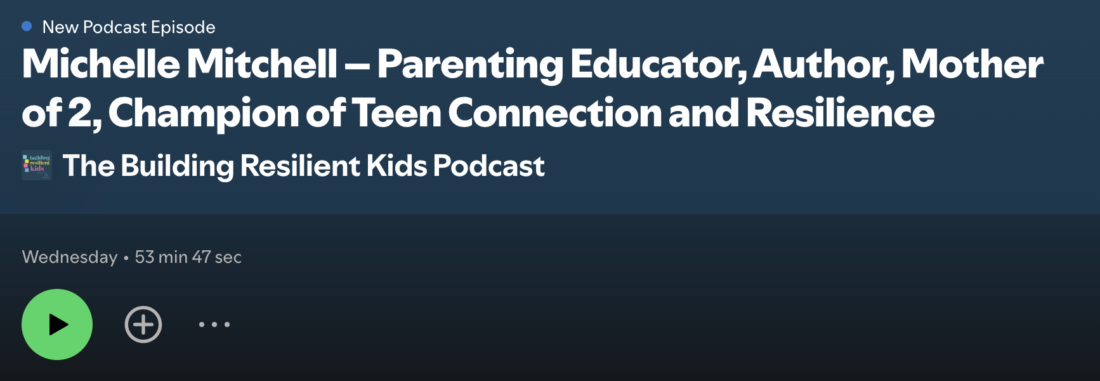
In this insightful and deeply practical episode of Building Resilient Kids, host Tim Curtis speaks with Michelle Mitchell – parenting educator, bestselling author, and owner/director of the Resilient Kids Conference about what it really takes to support teenagers through one of the most complex stages of development.
Drawing on decades of experience working with young people and families, Michelle shares a refreshing perspective on resilience, connection, and the evolving role of parents. From her early days working with at-risk youth to raising her own two sons, Michelle’s message is clear: resilience is not built in isolation—it is built in relationship.
This episode challenges common parenting narratives and offers grounded, actionable insights into how we can stay connected to our kids while giving them the space they need to grow.
Key Themes and Takeaways
- Resilience is not a solo effort: Kids don’t need to have all the skills—they need to know where to find them and who to trust
- The importance of community and connection as the foundation of resilience
- Why letting kids resolve conflict themselves builds stronger social and emotional capability
- Rethinking parenting labels like “helicopter” or “bulldozer” and instead focusing on principles over trends
- What teens aren’t telling parents: they don’t hate you—they need space to become themselves
- The power of trusting your instincts as a parent rather than interrogating for every detail
- Understanding the difference between bad behaviour and cognitive overload
- Why teenagers live in a near-constant state of dysregulation and how that shapes their reactions
- The importance of staying steady, present, and available rather than forcing conversations
- The “roundabout” analogy: teens may appear to move away, but they often come back
- Why the car is one of the most powerful environments for connection and regulation
- The “Russian doll” concept: building multiple layers of support around a child
- Reframing resilience: not bouncing back, but adapting and reshaping through adversity
- The importance of helping kids develop their own coping strategies, not just adopting ours
nEW here?
If you are new to my blog, I’m guessing that someone you trust mentioned my name, or you stumbled upon me online. This site is full of helpful parenting ideas that will help you make decisions with more confidence.
If you have something specific you are looking for, why not search the topics below. If you just want to browse, why not start by reading my most popular posts.
If you would like to receive Michelle’s blog via email each month, simply sign up below, indicating if you are a parent or a professional.

top reads
- 1. Try Being 5 Minutes Late: Common Sense Ideas to Promote Resilience
- 2. How to Deal with an Entitled Teen: Strategies You Can Use Today
- 3. Choosing a Counsellor: Ideas That Could Make All the Difference
- 4. Even If: Conversations to Combat Anxiety
- 5. What to Say if Your Child is Self-Harming: A Guide to the Initial Discussion